LunaBench
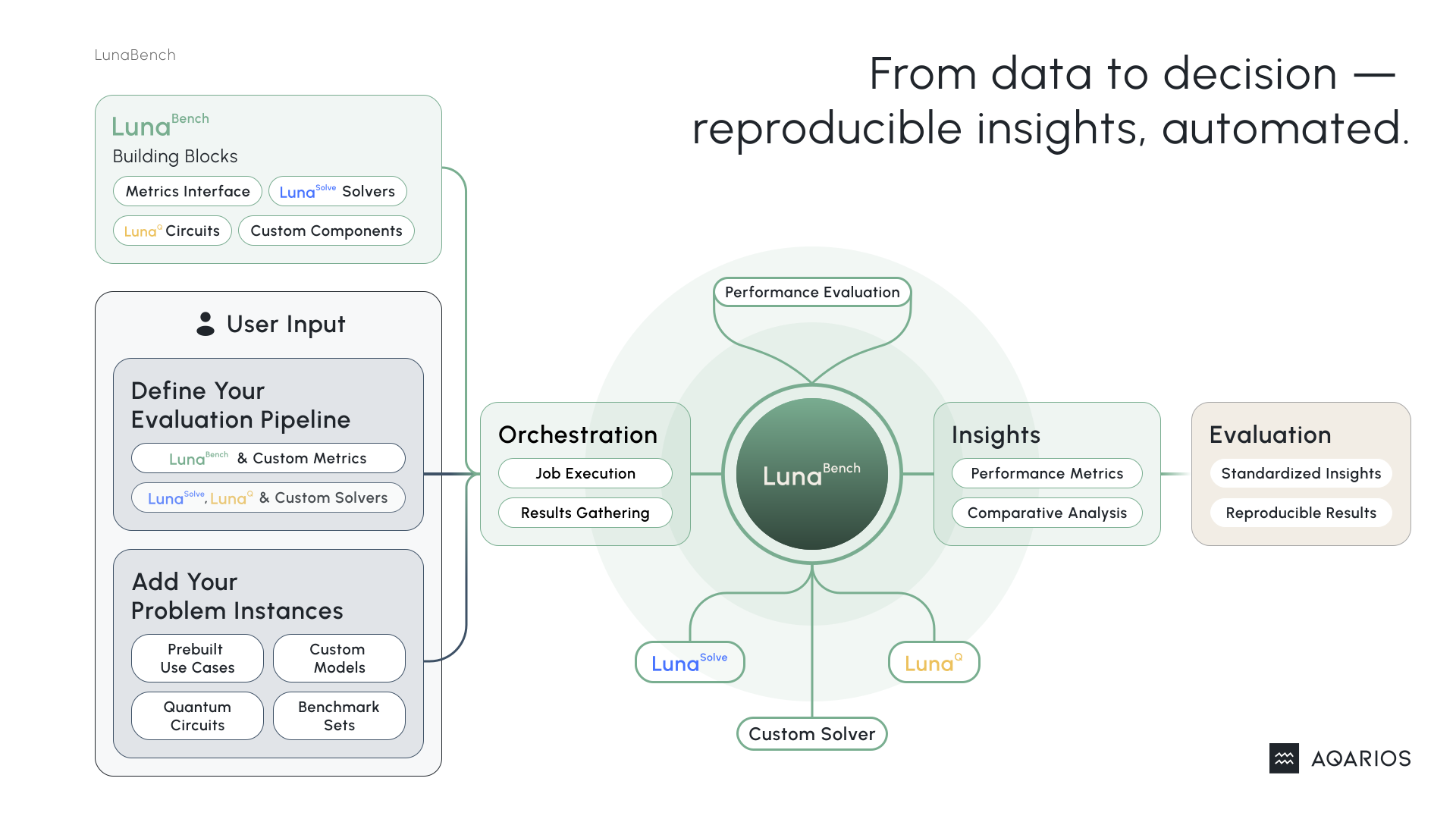
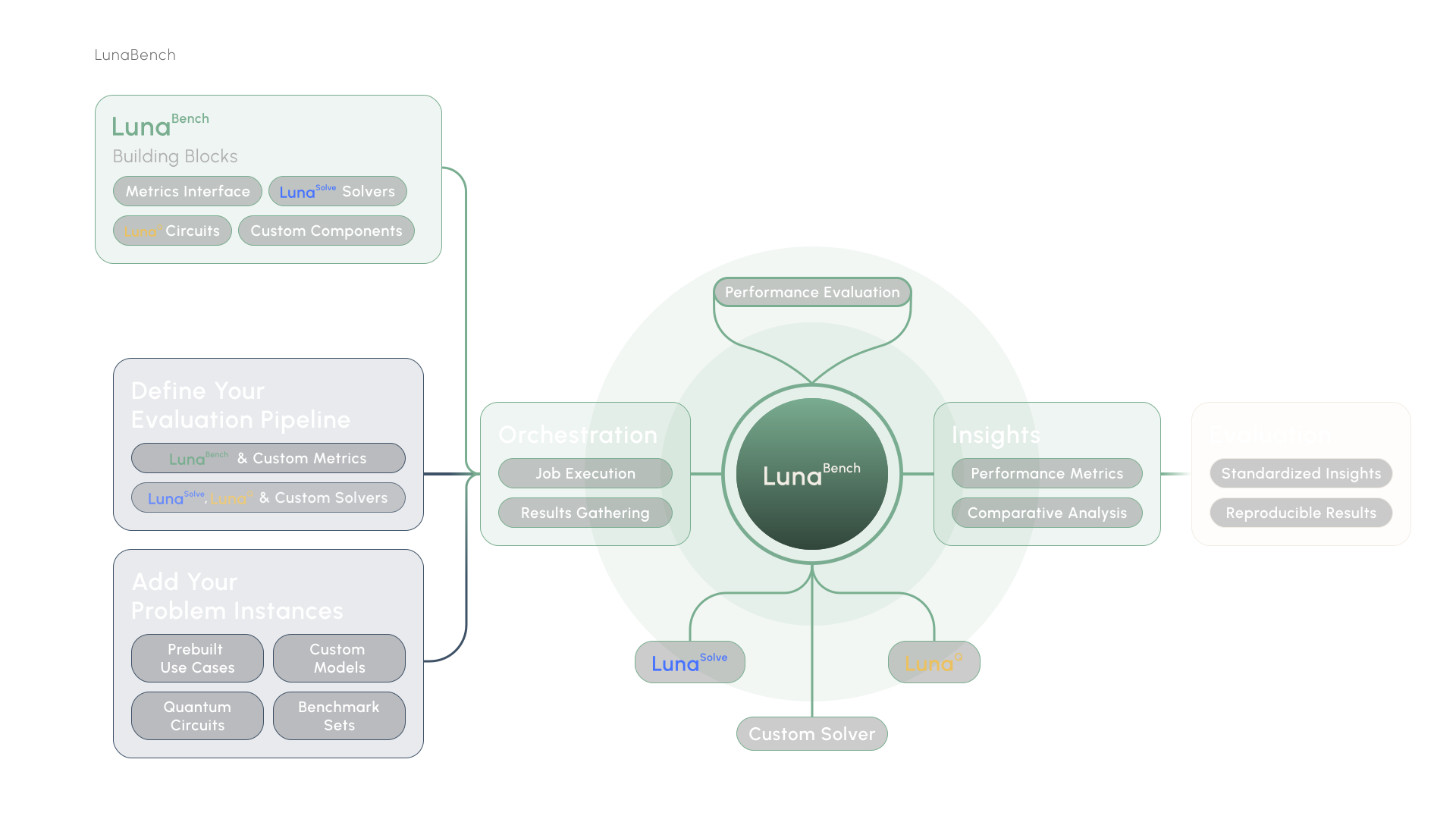
LunaBench is a benchmarking framework for comparing optimization algorithms across quantum, hybrid, and classical domains. Built on top of Luna Quantum, it provides a standardized, reproducible, and extensible pipeline for evaluating algorithm performance.
Key Features
- Reproducible Benchmarks: All benchmark configurations, model sets, and results are persisted in a SQLite database, ensuring full reproducibility across runs.
- Standardized Evaluation: Compare algorithms side-by-side using built-in metrics like approximation ratio, runtime, feasibility, and time-to-solution.
- Extensible Components: Register custom algorithms, features, metrics, and plots using a simple decorator-based system.
- Automated Pipeline: Run the full benchmarking workflow (features, algorithms, metrics, plots) with a single method call.
- Quantum and Classical: Support for both synchronous solvers (e.g., SCIP) and asynchronous cloud/quantum backends.
How It Works
LunaBench operates as a four-stage pipeline that executes in order:
graph LR
    A[Features] --> B[Algorithms]
    B --> C[Metrics]
C --> D[Plots]- Features: Extract model-level properties (e.g., variable count, problem size, constraint structure).
- Algorithms: Run each algorithm on every model in the model set (cartesian product).
- Metrics: Evaluate each algorithm's solutions using configured metrics.
- Plots: Generate visualizations from the collected metrics and features data.
Quick Example
Python
from luna_quantum import Model, Variable, Vtype, Bounds, Unbounded
from luna_bench import Benchmark, ModelSet
from luna_bench.algorithms import ScipAlgorithm
from luna_bench.features import VarNumberFeature
from luna_bench.metrics import Runtime, ApproximationRatio

# Build a model and add it to a model set
model = Model("problem1")
with model.environment:
    x = Variable("x", vtype=Vtype.REAL, bounds=Bounds(lower=0, upper=Unbounded))
    y = Variable("y", vtype=Vtype.REAL, bounds=Bounds(lower=0, upper=Unbounded))
model.objective = 3 * x + 2 * y
model.constraints += x + y <= 10

model_set = ModelSet.create("my-models")
model_set.add(model)

# Create and configure a benchmark
bench = Benchmark.create("my-benchmark")
bench.set_modelset(model_set)

# Add components
bench.add_algorithm("scip", ScipAlgorithm())
bench.add_feature("num-vars", VarNumberFeature())
bench.add_metric("runtime", Runtime())
bench.add_metric("approx-ratio", ApproximationRatio())

# Run the full pipeline
bench.run()
Installation
LunaBench requires Python 3.13+. Install with uv or pip:
What's Next
-
Getting Started
Set up your first benchmark in minutes.
-
Architecture
Understand the layered design and pipeline execution model.
-
Components
Learn about model sets, features, algorithms, metrics, and plots.
-
API Reference
Full API documentation for all public classes and functions.